Start with curing. A new concrete or rendered interior leaches lime for months after it is filled, and that pushes pH up persistently. Left alone, the result is scale along the waterline and etching of the finish — permanent marks on a surface that is only weeks old. Correcting it is not difficult, but it has to be done on a tighter cycle than a settled pool needs, because the chemistry is actively moving rather than drifting.
Then stabiliser. A fresh fill contains none at all, and without it, Sunshine Coast UV strips free chlorine out of the water within hours. Owners of new pools routinely conclude their chlorinator is faulty when the real answer is that the sanitiser is being destroyed by sunlight as fast as it is produced. Getting stabiliser to the right level early is the single biggest saving available on a new pool's chemical bill, and it is one of the few things that is genuinely cheap to fix and expensive to ignore.
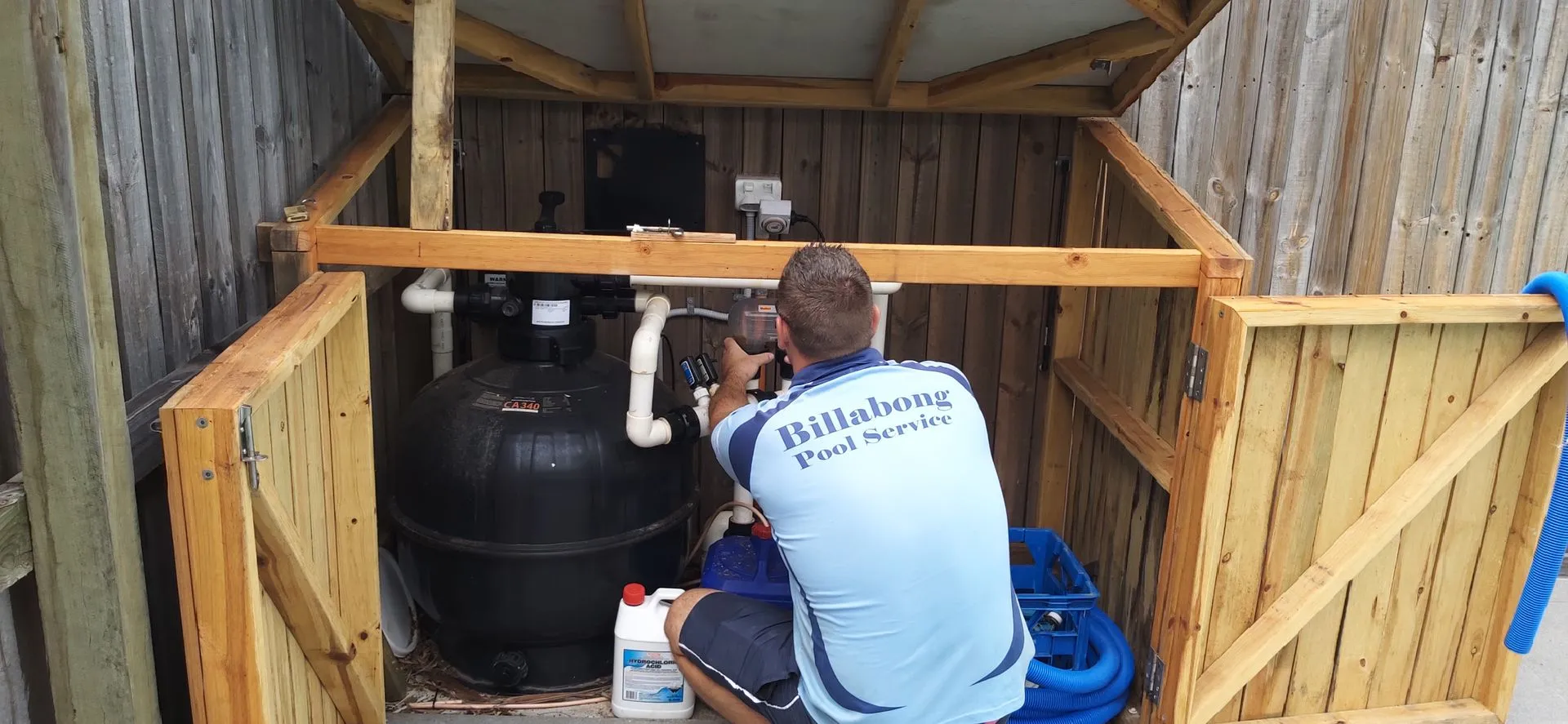
Third, the filter. Construction fines — the very small material thrown off by slabs, block cutting and earthworks — are far smaller than leaf debris and pack into media or a cartridge much faster. A brand-new filter will load more quickly in its first year here than it ever will again. That is not a defect, and it settles as the surrounding blocks are finished and planted, but until then filter pressure is a thing to check every visit rather than occasionally.
Finally, the equipment settings. New pools arrive with pump run times, timer schedules and chlorinator output configured to a default rather than to your pool's volume. That default is a starting point, not a calculation, and it is worth correcting before it becomes twelve months of habit.