Regular pool cleaning
Scheduled cleaning and water balancing, with debris removal and dosing sized to the real volume of the pool rather than a standard assumption.
A pool that has caught a week of wind-blown dust and grass needs a different clean from one under a tree. Filter pressure is checked every visit here.
Book a clean
Tank and bore top-up water testing
Testing of your source water, not just your pool, with pre-treatment where you fill from a bore.
Soft tank water pulls calcium out of a rendered or pebble interior. Bore water stains it. Both are cheap to prevent and expensive to fix.
Test my top-up water
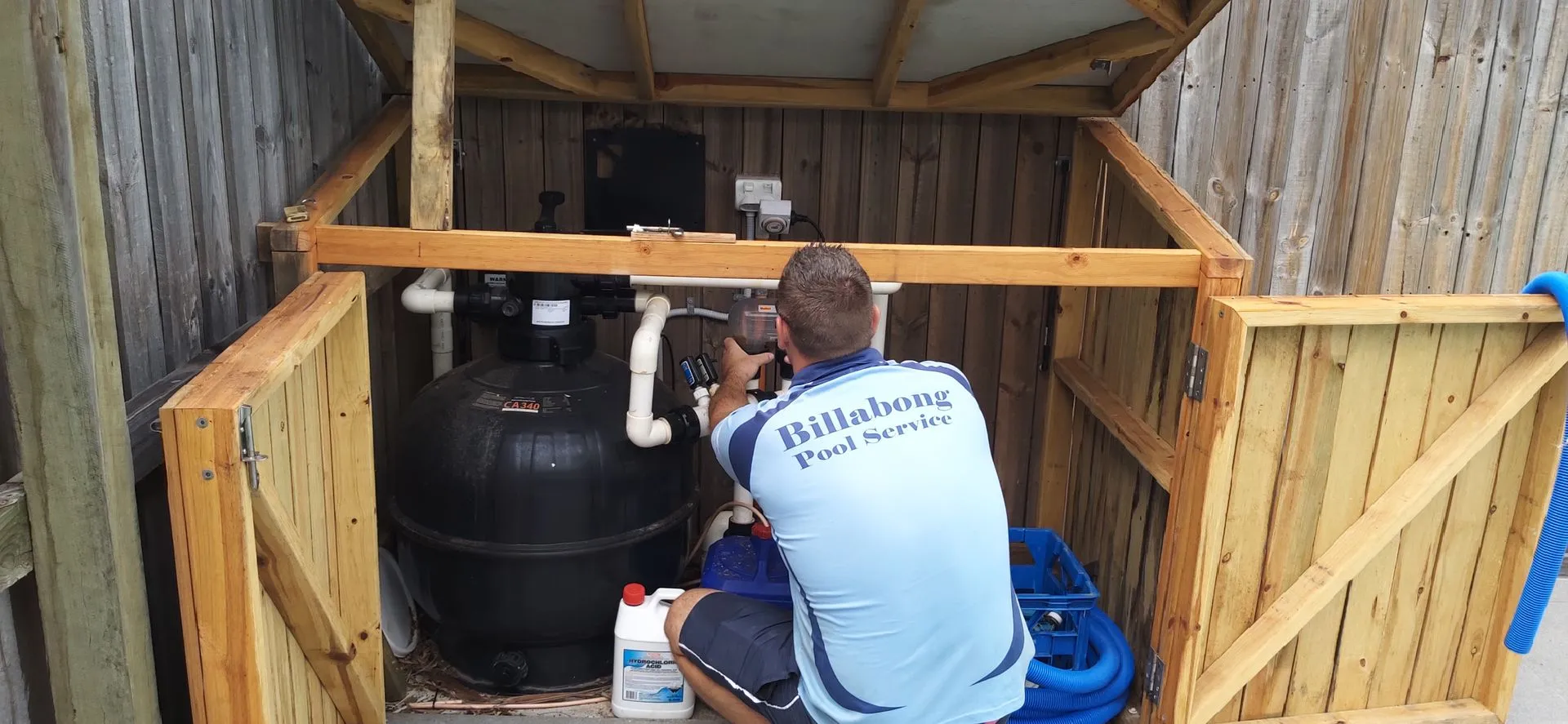
Filter and equipment servicing
Filter pressure checks, media or cartridge cleaning, and inspection of pump, valves, salt cell, timers and the longer plumbing runs larger properties tend to have.
Fine dust and grass pack a filter faster than leaves do, so the cleaning interval here is set by pressure rather than by the calendar.
Book a service
Pool repairs
Diagnosis and repair of pumps, filters, chlorinators, valves and plumbing.
Long plumbing runs between house and pool are common on the larger blocks here, and they are a frequent and easily missed source of loss.
Book a repair
Pool covers and blankets
Covers and blankets to cut debris, evaporation and chemical use.
On an exposed block a cover does more work than it does in a sheltered yard — it is the difference between weekly and fortnightly servicing through winter.
See pool covers
Managed servicing for absent owners
A full-service arrangement with a report after each visit and a call only when something needs a decision.
This is the most common arrangement on the larger blocks here, where the pool is a long way from the house and out of anyone's daily route.
Put it on a schedule