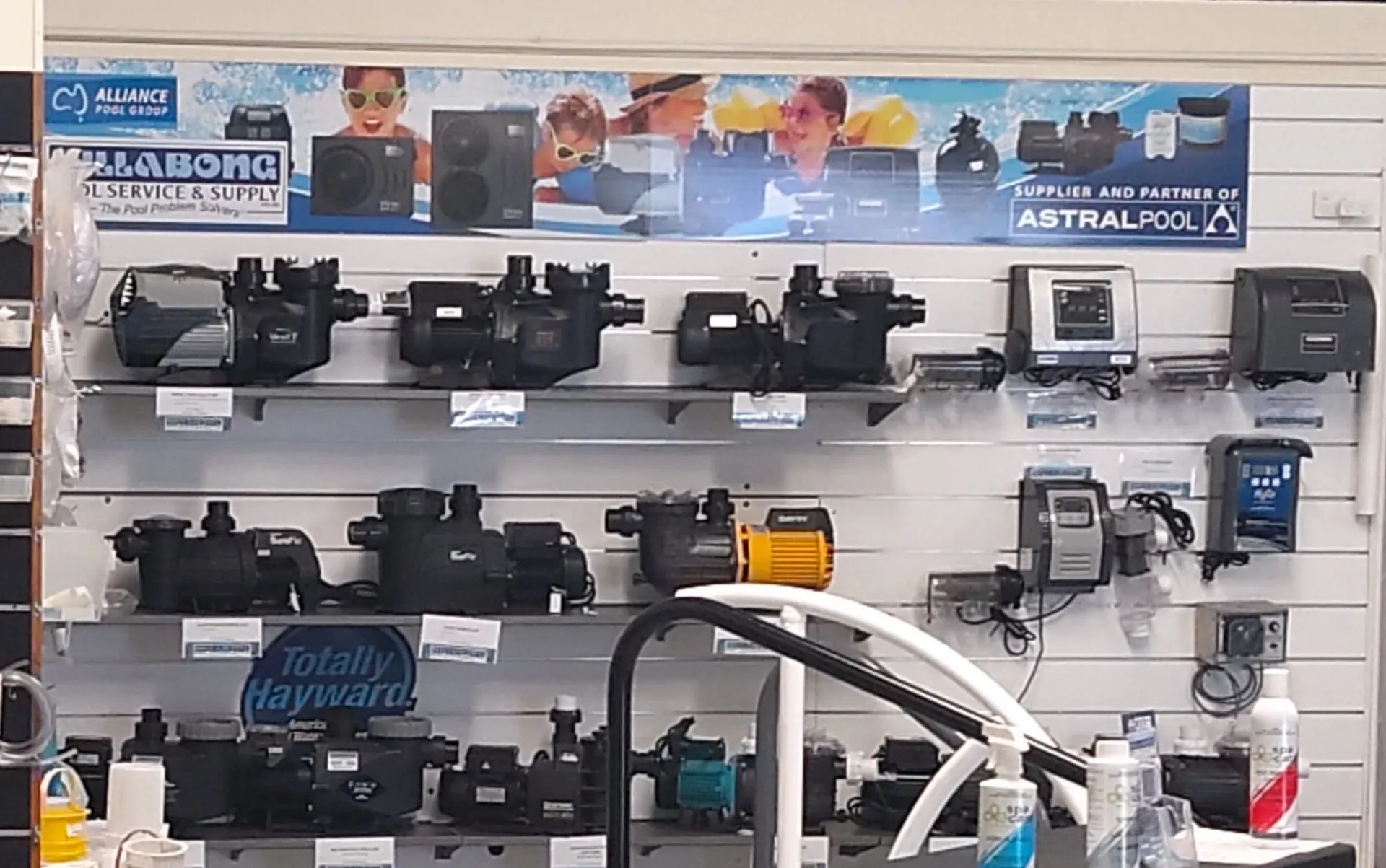
Stain and scale treatments stocked for Golden Beach pool owners at Billabong Pool Service & Supply

Your Pool Supply Shop for Golden Beach

Sunshine Coast Region, QLD

When the problem is on the surface, not in the water

Stain removers, sequestering agents and scale treatments — identified before they are treated

Golden Beach is the oldest of the six by median age — 55 at the 2021 Census, with 5,646 residents, 56.5% of occupied dwellings separate houses and another 29.1% flats. Some 46.4% of homes are owned outright and 20.1% of private dwellings were unoccupied on Census night, with an average household of 2.1 people. Long-held homes and long-held pools, and surfaces that have had decades to accumulate whatever the water has been carrying.

A stain and an algae patch look similar from three metres away and need completely different treatment. So do an organic stain and a metal one — and the wrong choice on that second question does not merely fail, it can set the mark permanently.

That is why this page leads with identification rather than product. Photograph the mark, bring a water sample, and we will tell you what you are dealing with before you spend anything.

Local water knowledge

What your pool needs here

Organic stains — leaf litter, worm casts, anything that has sat on the surface — lift with chlorine. Metal stains, usually iron or manganese, do the opposite: chlorine oxidises the metal and sets the stain harder. The two require opposite chemistry, and there is no way to tell them apart reliably by eye.

Metal typically arrives with the water rather than from the pool. On a pool topped up from a bore or a tank, that is the likely route. It can also come from fittings corroding out of sight, which is worth knowing because treating the stain without addressing the source means doing it again.

Scale is a third category and a different problem again — calcium coming out of solution and depositing on tiles and surfaces. It is driven by hardness and pH, so removing it without correcting those means it returns.

Three categories, three treatments, and one photograph and water sample to tell them apart.

What brings people in

The problems behind the purchase

The challenge

Treating a metal stain with chlorine

Why it happens

Chlorine is what fixes most pool problems, and an organic stain does lift with it.

Why it matters

On a metal stain chlorine oxidises the metal and sets the mark harder. The wrong treatment makes it permanent.

How we help

We identify the stain type before recommending anything. Bring a photo and a water sample.

The challenge

Staining that appears right after topping up

Why it happens

Metal in the fill water — commonly iron from a bore — oxidises on contact with chlorinated water and settles onto the surface.

Why it matters

Every subsequent top-up repeats it, so the pool stains again after each correction.

How we help

Sequestering agents hold the metal in solution, and pre-treating before the next fill prevents the next round.

The challenge

Scale that keeps coming back after removal

Why it happens

Removal addresses the deposit, not the hardness and pH that produced it.

Why it matters

The owner pays for the same job repeatedly.

How we help

We test hardness and pH as part of the profile, so the correction that stops it returning is part of the plan rather than a later surprise.

The challenge

Mistaking black algae for a stain, or the reverse

Why it happens

Both are dark, both sit on the surface, and neither responds to ordinary brushing.

Why it matters

Black algae has a protective cap and needs a specific treatment; a stain needs identification. Time spent on the wrong one is wasted.

How we help

Black algae is slightly raised and returns in the same spot after brushing; a stain is flush and does not grow back once removed. We will tell you which you have.

The challenge

Why it happens
Why it matters
How we help
The challenge

Why it happens
Why it matters
How we help
Our pool supply range

What is on the shelves

Stain identification

The step before treatment. Organic and metal stains need opposite chemistry, and there is no reliable way to tell them apart by eye.

Bring a photo of the mark and a water sample. Identification is free and decides everything after it.

Bring a photo in

Sequestering agents

Hold metals in solution so they cannot deposit on the surface, and pre-treat water before a top-up.

The prevention step for any pool topped up from a bore or tank.

See what we stock

Stain removers

Separate treatments for organic and metallic staining, matched to the identification rather than sold as one product.

The wrong one can set a stain permanently, which is why we identify first.

Ask at the counter

Scale treatments

For calcium deposits on tiles and surfaces, alongside the hardness and pH correction that stops them returning.

Removing scale without correcting hardness and pH means doing it again.

See treatments

Free in-store water testing

A full bench profile including calcium hardness and pH — the two readings that decide whether scale returns.

Free with no purchase condition, and the only way to know whether the water is the cause.

Bring a sample in

Algaecides for black algae

Specific treatment for algae with a protective cap that resists brushing and returns in the same spot.

If it brushes away cleanly and does not come back, it was probably a stain.

See the range
Advice before product

Why owners come back

Billabong Pool Service & Supply publishes ABN 63 010 047 239 and QBCC Licence No. 69021 in its own site footer. The shop is at 134 Bulcock Street, Caloundra QLD 4551 on 07 5438 1588, trading Monday to Friday 8:00am–4:30pm and Saturday 8:00am–12:00pm. The service team works out of the same building, so if the answer turns out to be corroding fittings rather than chemistry you are not sent somewhere else. Billabong does **not** issue pool safety certificates and does not perform pool safety inspections — that is a licensed pool safety inspector's work.

Pricing

What we list

Where to find us

Three shopfronts on the Sunshine Coast

Good to know

Frequently asked questions

Will draining and refilling remove a stain?

No, and it risks the shell. Stains are in or on the surface, not in the water — an empty pool still has the stain plus any damage the drain caused.

Why did my pool stain right after topping up?

Metal in the fill water, most commonly iron from a bore. It oxidises on contact with chlorinated water and settles onto the surface. Pre-treat before the next fill.

How do I tell a stain from black algae?

Black algae is slightly raised with a protective cap — brush it and it resists, then returns in the same spot. A stain is flush with the surface and does not grow back once removed.

Can I remove calcium scale myself?

Light scale, yes, with a scale remover and some effort. Heavy build-up on tiles usually needs professional treatment, and either way it returns unless hardness and pH are corrected.

Can I top up from a bore or tank safely?

Often, with pre-treatment. Test the source water first — it is the metal content that matters, and a sequestering agent before filling prevents most of the problem.

Should I shock the pool to clear a stain?

Not before identifying it. Chlorine lifts organic stains and sets metal ones harder, so shocking blind can make the mark permanent.

Why do my stainless fittings keep rusting?

Coastal exposure accelerates it, and corroding fittings can be the source of staining elsewhere in the pool. Worth tracing rather than just treating the mark.

Next step

Got a mark you cannot shift? Photograph it, bring a water sample, and we will identify it before you spend anything — including telling you if it is one to leave alone. Call 07 5438 1588 if you would rather check we are open first.

References

Sources

ABS 2021 Census QuickStats — Golden Beach (Qld) SAL311795,646 residents; median age 55; 56.5% separate houses and 29.1% flats among occupied private dwellings; 46.4% owned outright; 20.1% of private dwellings unoccupied; average household 2.1 people
Billabong Pool Service & Supply — site footerABN 63 010 047 239; QBCC Licence No. 69021; 134 Bulcock St, Caloundra; 07 5438 1588; trading hours