The coast does the same three things to every pool here, at different strengths depending on the street.
Sun. Mean daily maximums at Sunshine Coast Airport run from 21.2 °C in July to 29.1 °C in January, and the mean July minimum is 9.7 °C. The water never gets cold enough to stop a pool, and from spring onward UV strips free chlorine faster than most owners dose it. That is why stabiliser is part of every test we run, and why chlorine that "stopped working" in November is usually chlorine that was never protected.
Rain. The airport averages 1,492.6 mm a year, and 710 mm of it, almost half, falls between December and March. February alone averages 217.5 mm; September, the driest month, 51.1 mm. A big fall dilutes the water, drops the alkalinity and washes in whatever was on the paving, so the pool that was fine on Friday is cloudy on Monday. After a storm the useful purchase is a test, then balancers and clarifier in the right order, not a drum of chlorine.
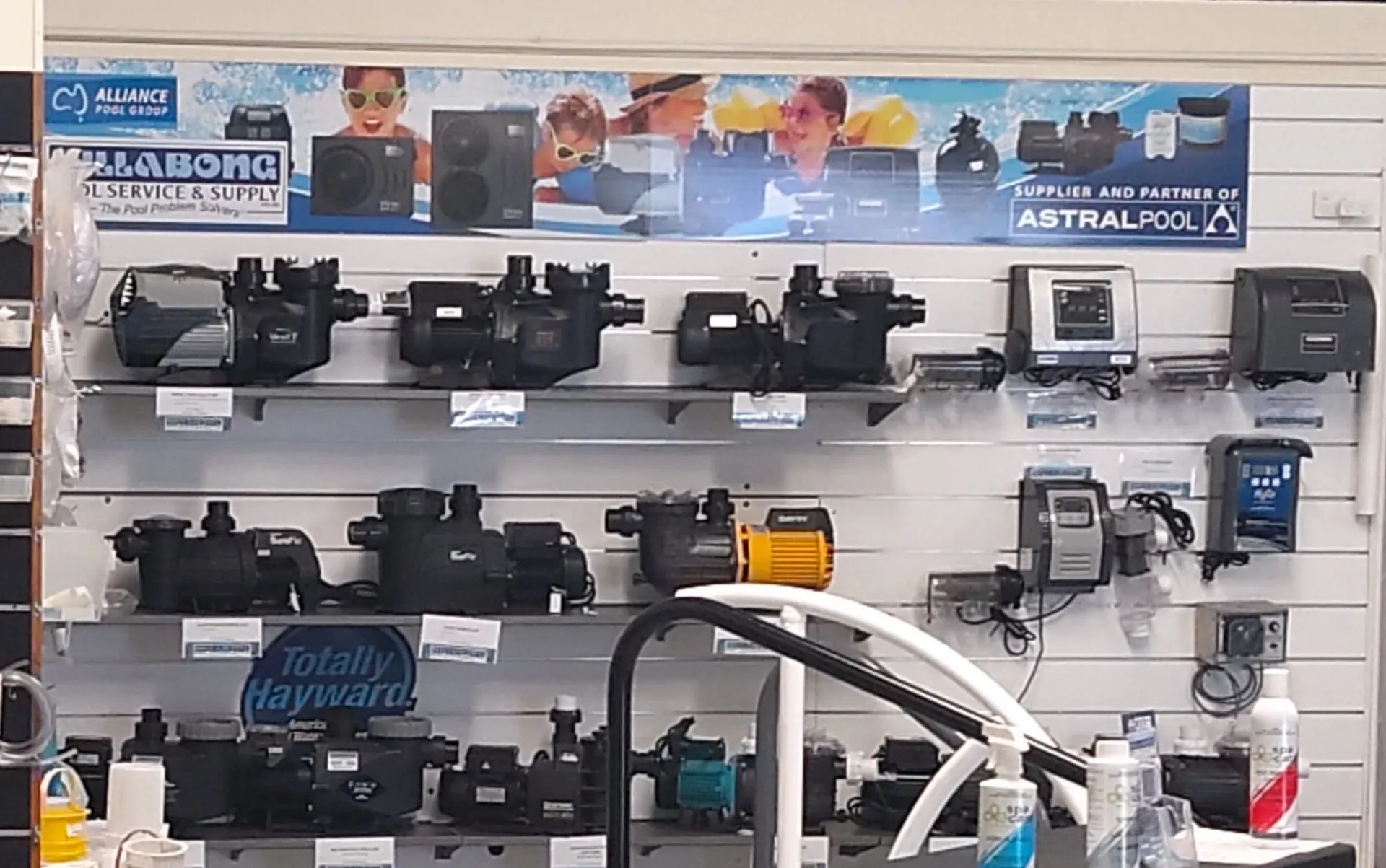
Salt. Close to the beach the air carries salt and the humidity holds it on every metal surface at the equipment pad. Terminals, housings and fittings corrode before their time. It is the reason the parts wall is as deep as the chemical wall, and why the service team works out of the same buildings as the shops.
The suburb pages below carry the detail for each part of the coast, grouped by the shop that serves them.